💵
Value My Car → We Buy Cars — Even If You Don’t Buy From Us.
Get a real offer on your vehicle in minutes. No obligation, no pressure.

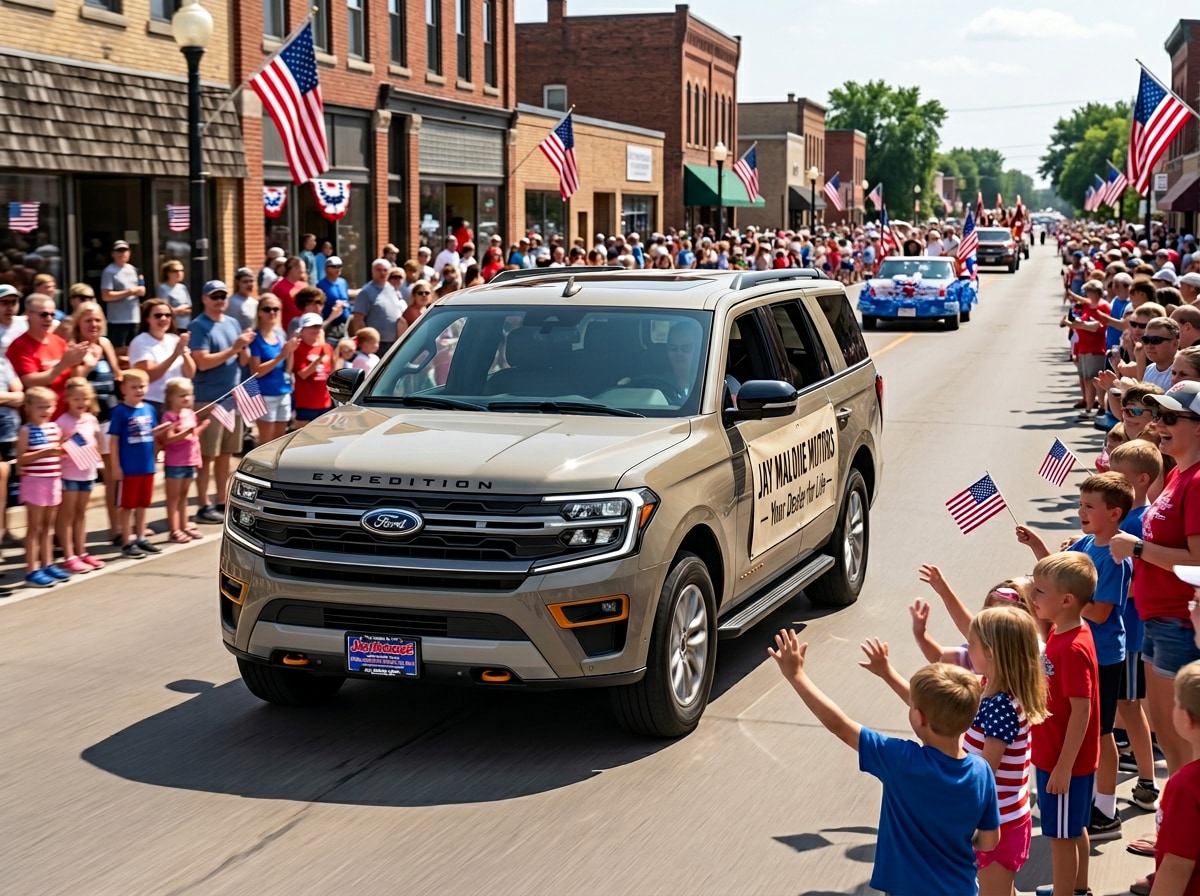
Buyers cross-shopping the 2026 Ford Expedition® typically have three other vehicles on their list: the Chevrolet Tahoe, the Chevrolet Suburban, and the Toyota Sequoia. All four are body-on-frame, full-size, three-row SUVs built around the same use case — family hauling, real towing capacity, and the kind of long-haul comfort that makes road trips work. Each one does some things differently, and the right choice depends on what you actually want from a full-size SUV. This guide compares the 2026 Expedition against all three competitors honestly, calls out where each vehicle wins, and helps central Minnesota buyers figure out which one fits their life.
On This Page
Before the deep-dive, here’s the short answer for buyers who don’t want to read the whole post:
Get the 2026 Ford Expedition if: you want the most technology standard at the entry price (24" panoramic display, full Co-Pilot360 suite, BlueCruise availability), you want the most off-road-capable full-size SUV (Tremor with locking diff and 33" tires), you want maximum towing capacity (up to 9,600 lbs available), or you want Pro Trailer Backup Assist as standard equipment.
Get the Chevrolet Suburban if: maximum cargo space behind the third row is your top priority — the Suburban offers more total cargo capacity than any vehicle in this group, with up to 16 cubic feet more behind the third row than the Tahoe.
Get the Chevrolet Tahoe if: you want a more affordable entry into a Chevy full-size SUV (the Tahoe starts lower than the Suburban or Expedition), you want a turbodiesel option (only the Tahoe and Suburban offer one), or you specifically want Super Cruise hands-free driving (similar concept to BlueCruise, available on LT trim and higher).
Get the Toyota Sequoia if: hybrid fuel economy is your top priority (the Sequoia is the only hybrid full-size SUV in this group), you want Toyota’s reliability reputation, or you want the TRD Pro for off-road use with Fox internal bypass shocks. Be aware: the Sequoia’s hybrid battery placement and solid rear axle reduce cargo space behind the third row to about 22.3 cubic feet, the smallest in this group.
All four are good vehicles. The differences come down to specific priorities — technology, capability, cargo space, fuel economy, or hybrid powertrain.
The Tahoe is the closest direct competitor to the Expedition — similar size, similar segment positioning, similar use case. Where the differences show up:
Where the Expedition wins:
Where the Tahoe wins:
Honest take: the Tahoe and Expedition are genuine competitors. For most central Minnesota buyers, the Expedition’s towing headroom and off-road capability give it an edge. For buyers who specifically want the diesel option or who prefer GM’s adaptive suspension technology, the Tahoe has features the Expedition doesn’t match.
The Suburban is the longer-wheelbase Chevy, sharing the Tahoe’s engines and most equipment but with substantially more cargo space. The natural comparison is Suburban vs. Expedition MAX, both being the long-wheelbase versions in their respective lineups.
Where the Suburban wins:
Where the Expedition (in MAX configuration) wins:
Honest take: the Suburban and Expedition MAX are the two heavyweight cargo champions in this segment. The Suburban wins on absolute cargo space behind the third row. The Expedition MAX wins on towing capacity, off-road availability (Tremor is standard length only, but Active 4x4 MAX with HDTT delivers strong capability with the long wheelbase), and standard Pro Trailer technology. If your primary use case is hauling stuff and you don’t care about towing or off-road, the Suburban is hard to beat. If you want a full-size SUV that excels at multiple use cases, the Expedition (especially MAX) is the more versatile choice.
For a deeper look at the Expedition’s standard vs. MAX decision, see our 2026 Ford Expedition vs. Expedition MAX guide.
The Sequoia is the unique entry in this group — the only hybrid-only full-size SUV in the segment. Toyota’s i-FORCE MAX hybrid powertrain is standard across every Sequoia trim.
Where the Sequoia wins:
Where the Expedition wins:
Honest take: the Sequoia is the right answer for buyers whose top priority is hybrid fuel economy and Toyota reliability. The Expedition is the right answer for buyers who want more cargo space, hands-free highway driving, and a more flexible third-row/cargo configuration. For central Minnesota families who do a lot of highway driving (Twin Cities commutes, road trips out of state), the BlueCruise advantage matters meaningfully.
Side-by-side engine specs across the group:
2026 Ford Expedition:
2026 Chevrolet Tahoe and Suburban:
2026 Toyota Sequoia:
Powertrain key takeaways:
All four vehicles are body-on-frame full-size SUVs designed for serious towing. Here’s how the max ratings compare:
Maximum towing capacity (when properly equipped):
The Expedition leads by about 80-100 lbs vs. Sequoia and by a substantial margin (~1,200 lbs) vs. the Tahoe and Suburban. For most family towing, all four vehicles are comfortable. For buyers towing at the upper end — larger travel trailers, larger horse trailers with multiple horses, mid-size fifth-wheel-style trailers in bumper-pull configuration — the Expedition’s extra capacity matters.
Trailering features compared:
For more on the Expedition’s towing capabilities specifically, see our 2026 Ford Expedition towing and family hauling guide.
Technology is one of the cleanest places to see how these four vehicles differ.
Display setup:
The Expedition has the most digital screen real estate dedicated to the driver in this group. The 24" panoramic display is unique — competitors have larger center touchscreens (Tahoe’s 17.7" is bigger than the Expedition’s 13.2" center stack), but the Expedition’s combination of driver-facing panoramic + center stack is a different layout philosophy.
Hands-free highway driving:
For long-haul highway use — the kind of driving central Minnesota families do regularly — both Ford and GM offer hands-free systems. Toyota currently doesn’t. If hands-free highway is a priority, the Expedition or Tahoe/Suburban are your two options.
Standard ADAS suites:
All four vehicles have comprehensive standard ADAS suites. The Expedition’s standard Co-Pilot360 Assist 2.0 includes more features standard at the entry trim than competitors typically do.
For the full Expedition technology breakdown, see our 2026 Ford Expedition technology and BlueCruise guide.
Off-road capability is where the segment has gotten more competitive in recent years. Each manufacturer now offers an off-road-focused trim.
Ford Expedition Tremor: 440-hp High-Output engine, 3.73 electronic-locking rear differential, modified higher-ride suspension with premium passive shocks, modified Raptor-derived skid plates with fuel tank underbody protection, 33" all-terrain tires, Trail Control with Trail One Pedal Drive and Trail Turn Assist, Rock Crawl drive mode. Standard length only, 4x4 only.
Chevrolet Tahoe Z71: Two-speed transfer case, all-terrain tires, hill descent control, front and rear skid plates, recovery hooks. Optional adaptive air suspension. The Z71 is a competent off-road trim, but doesn’t match the Tremor’s hardware (no factory locking differential, no Rock Crawl mode, smaller tires).
Toyota Sequoia TRD Pro: Fox internal bypass shocks, 33" all-terrain tires, electronic locking rear differential, TRD skid plate, Multi-Terrain Select, Crawl Control, 9.1" ground clearance. Genuinely capable off-road trim, the closest direct competitor to the Tremor in hardware terms.
Honest off-road comparison:
For more on the Expedition Tremor specifically, see our 2026 Ford Expedition Tremor deep dive.
All four vehicles offer up to 8 passenger seating with a second-row bench, or 7 with second-row Captain’s Chairs. Where the meaningful differences show up:
Cargo space behind the third row:
Maximum cargo (all rows folded):
Third-row legroom: The Tahoe specifically advertises 34.9" of third-row legroom thanks to its independent rear suspension. The Expedition’s third row is also genuinely usable for adults. The Sequoia’s third row is more constrained due to the solid rear axle limiting floor depth.
Cargo space takeaway: Suburban wins on absolute volume, with Expedition MAX as the closest Ford competitor. Sequoia’s hybrid layout costs it cargo space — that’s the real-world tradeoff for hybrid efficiency.
Specific buyer scenarios from the central Minnesota sales floor:
The young family that wants a full-size SUV with the most technology. Expedition Active Touring 202A. Standard 24" panoramic display, BlueCruise as a factory option, full Co-Pilot360, available 4x4. The most technology standard at the most accessible Expedition price point.
The family that hauls everything — gear, kids, dogs, full vacation luggage. Suburban or Expedition MAX. Suburban for absolute maximum cargo space behind the third row. Expedition MAX if you also want towing headroom and Pro Trailer features standard.
The cabin-and-boat family who tows a 5,000-7,000 lb camper or boat. Expedition or Sequoia. Both deliver 9,500+ lbs available max towing. Expedition has more cargo behind the third row and BlueCruise; Sequoia has hybrid efficiency. Choose based on which matters more to you.
The deer hunter / ice fisherman / serious off-road user. Expedition Tremor or Sequoia TRD Pro. Both are genuinely capable. Tremor has the Raptor-derived skid plates and fuel tank underbody protection that the TRD Pro doesn’t match. TRD Pro has Toyota’s reputation for reliability and the Fox bypass shocks. Test drive both back-to-back.
The high-mileage commuter who wants hybrid efficiency. Sequoia. The only hybrid-only full-size SUV in the segment. EPA-estimated 22 combined MPG is meaningfully better than the Expedition’s gas-only powertrains or the Tahoe/Suburban V8s. The diesel Tahoe/Suburban is also efficient but with different operating economics (DEF refills, diesel fuel pricing).
The buyer cross-shopping luxury full-size SUVs. Expedition King Ranch or Platinum Ultimate, Tahoe High Country, Suburban High Country, or Sequoia Capstone. All four are flagship-level configurations with different luxury aesthetics. King Ranch’s Mesa Antique two-tone leather is the most distinctive of the group; the others are more conventional luxury treatments. Compare in person.
The buyer who wants Super Cruise specifically. Tahoe LT or higher, or Suburban LT or higher. Super Cruise is available across multiple GM trim levels.
The buyer who wants a turbodiesel. Tahoe or Suburban with the 3.0L Duramax. The only diesel option in this segment. For long-haul highway towing, the diesel’s torque (495 lb-ft) and fuel economy are appealing.
The buyer who can’t decide. Test drive all four. The Expedition reads differently from the Tahoe reads differently from the Suburban reads differently from the Sequoia. Spec sheets only get you so far — the right answer usually becomes clear after an hour behind the wheel of each.
For the full Expedition trim breakdown, see our 2026 Ford Expedition trim levels guide.
Key Takeaways
In this group, the 2026 Ford Expedition leads with available max towing of up to 9,600 lbs when properly equipped. The Toyota Sequoia is close behind at up to 9,520 lbs. The Chevy Tahoe maxes at 8,400 lbs and Suburban at 8,300 lbs. For most family towing, all four are comfortable; for buyers near the upper end of capacity, the Expedition’s extra rating gives more headroom.
Depends on your priorities. The Sequoia’s i-FORCE MAX hybrid delivers EPA-estimated 22 combined MPG — meaningfully better than the Expedition (gas-only) or the Tahoe/Suburban V8s. For high-mileage drivers, that fuel savings adds up. The tradeoff is cargo space behind the third row (about 22.3 cu ft, the smallest in this group) due to hybrid battery placement and the solid rear axle. If your daily use involves a full third row plus cargo, the Expedition or Tahoe gives you more room. If fuel economy matters more than cargo flexibility, the Sequoia is the right choice.
Both are genuinely capable off-road trims. The Expedition Tremor brings modified Raptor-derived skid plates with fuel tank underbody protection — hardware the TRD Pro doesn’t match. The TRD Pro brings Fox internal bypass shocks (well-respected for high-speed off-road work), 9.1" of ground clearance, and Toyota’s reliability reputation. Both have electronic-locking rear differentials and 33" all-terrain tires. For technical low-speed off-road and protection against undercarriage damage, the Tremor has an edge. For high-speed off-road work, the TRD Pro’s Fox shocks are competitive. Test drive both before deciding.
No. For 2026, the Expedition is offered with the standard 3.5L EcoBoost V6 (400 hp) and the High-Output version (440 hp / 510 lb-ft) — both gasoline-only. The Sequoia is the only hybrid full-size SUV in this comparison group.
No. The Suburban is positioned as a luxury family hauler with maximum cargo space, not as an off-road vehicle. If you want long-wheelbase capability and off-road capability, your options are the Expedition MAX (which doesn’t come in Tremor configuration but can be ordered as Active 4x4 MAX, Platinum 4x4 MAX, or King Ranch 4x4 MAX with the Heavy-Duty Trailer Tow Package), or the Sequoia (which comes in only one length but offers TRD Pro for off-road).
Both are hands-free highway driving systems that work on prequalified roads. Both use driver-monitoring cameras to ensure your eyes stay on the road. Both have similar levels of capability in their current versions. The two systems use different mapping data and have different specific road coverage in different parts of the country, but for general I-35, I-94, US-7, and other major Minnesota highway use, both work well. The decision is mostly about which manufacturer’s vehicle you prefer overall — the hands-free system is comparable on either side. Toyota currently doesn’t offer a similar system on the Sequoia.
Depends on your driving and economics. The Tahoe’s 3.0L Duramax turbodiesel produces 305 hp and 495 lb-ft of torque, with substantially better fuel economy than the V8 options — up to about 28 mpg highway. For long-haul highway towers and high-mileage drivers, the diesel adds up to real fuel savings. Tradeoffs: diesel fuel typically costs more than gasoline, you need DEF (diesel exhaust fluid) refills, and diesel maintenance can be more expensive than gasoline. For shorter trips and most family use, the Expedition’s 400-hp V6 EcoBoost on regular fuel is a simpler ownership experience. The diesel makes most sense for buyers who put 25,000+ miles on their full-size SUV per year.
If you’re cross-shopping the Expedition against Tahoe, Suburban, or Sequoia, the best way to decide is to test drive the Expedition first — we’ll set you up with a real drive on US-7 or MN-15 that includes the kind of conditions you’ll actually drive in. Most buyers come in expecting one answer and leave with another after seeing the technology, capability, and feel of the Expedition in person.
If we don’t have your exact configuration in stock, we’ll either pull one from another dealer at no extra charge or place a factory order through Ford. Same price either way — that’s how we’ve operated since 2005, and that’s how we plan to keep operating.
About the Author
I’m Jordan Malone-Forst, Assistant General Manager at Jay Malone Motors in Hutchinson, MN. I’m proud to be part of the family business my dad Jay started in 2005 — and even prouder to serve the community I grew up in. When I’m not at the dealership, you’ll find me involved with the Hutchinson Ambassadors and Chamber of Commerce. If you have questions about any Ford vehicle or want to talk through your options, reach out — I’d love to help.