💵
Value My Car → We Buy Cars — Even If You Don’t Buy From Us.
Get a real offer on your vehicle in minutes. No obligation, no pressure.


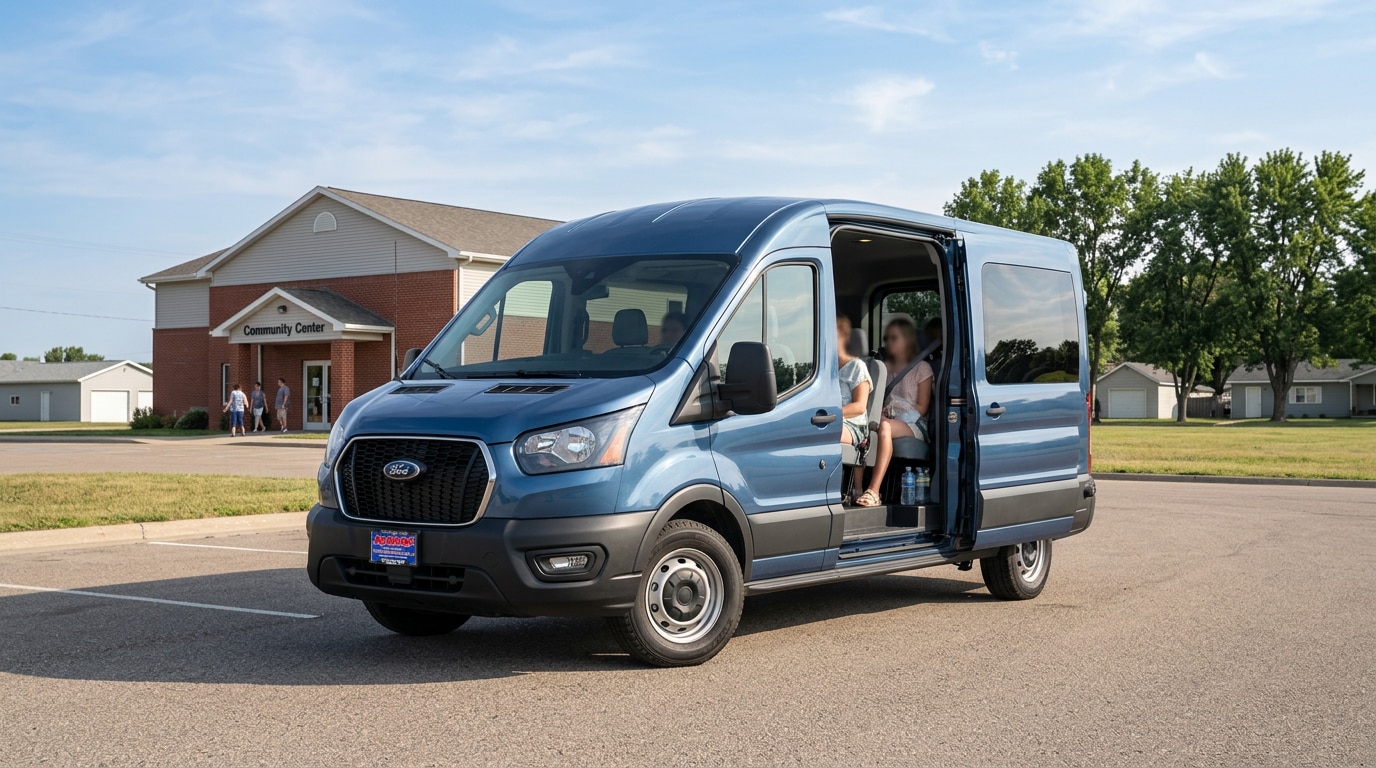
The 2026 Ford Transit® Passenger Van is the right answer for buyers needing to transport 12 or 15 passengers — school districts running activity transport and small-route bus service, hotel and airport shuttle operations, business crew transport, churches and nonprofit organizations, and the rare larger family genuinely needing 12+ seats. Two trims (XL and XLT) cover the work-focused-to-premium range, with the 3.5L EcoBoost® V6 standard on all Passenger Van configurations, Ford Co-Pilot360® standard, Ford Co-Pilot360 Assist 2.0 standard on XLT, and substantial 2026 updates including the new 253-Degree Rear Door Hinge Opening on high-roof variants, all-new 8-inch cluster display, SYNC® 4 with 12-inch center display, and keyless push-button Start standard. This guide walks through the Passenger Van XL vs XLT differences, seating configurations, available comfort and technology features, the School Bus Prep Package and other commercial passenger options, and which configuration fits which buyer in central Minnesota — from Hutchinson school district activity transport to Twin Cities-area hotel and airport shuttles.
On This Page
The two Passenger Van trims share the same seating capacities (12 or 15 passengers) and the same EcoBoost V6 engine, but differ substantially in interior comfort, technology, and safety features.
Passenger Van XL — the work-focused base trim:
Passenger Van XLT — the comfort-upgraded premium trim. Includes everything in XL plus:
Practical XL vs XLT decision:
Both Passenger Van XL and XLT offer two passenger capacity configurations:
12-passenger configuration (option 96P):
15-passenger configuration (option 96K):
Seat fold-down options (for some configurations):
Wheelchair and accessibility considerations. Standard Passenger Van configurations don’t include factory wheelchair accessibility. For wheelchair-accessible passenger transport, aftermarket conversion by approved upfitters is the standard approach. The 2026 update of 253-Degree Rear Door Hinge Opening on high-roof Passenger Van LWB/LWB-EL configurations significantly improves rear access for wheelchair upfit applications.
All Passenger Van XL and XLT configurations use the 3.5L EcoBoost V6 gas engine as standard equipment — the 3.5L PFDi V6 isn’t available on Passenger Van.
Why the EcoBoost on Passenger Van:
Drivetrain options:
Fuel capacity: 25-gallon standard, 31-gallon available. The extended fuel tank meaningfully increases range between fill-ups for longer shuttle routes or high-mileage operations.
For more on engine specifics — including the gas vs E-Transit electric decision framework, RWD vs AWD considerations, and specific torque/horsepower comparisons — see our 2026 Ford Transit engines and E-Transit guide.
The 2026 Passenger Van’s safety and driver-assist technology is genuinely class-leading for the commercial passenger van segment.
Ford Co-Pilot360 standard on Passenger Van XL and XLT:
Ford Co-Pilot360 Assist 2.0 standard on Passenger Van XLT (optional on XL):
Why Co-Pilot360 Assist 2.0 matters for passenger transport. Driving 12 or 15 passengers across highway routes, navigating tight school district parking lots, backing into hotel passenger pickup zones, or maneuvering through congested airport pickup areas — the 360-Degree Camera, Lane Centering with Adaptive Cruise, and BLIS substantially reduce driver workload and improve safety. For shuttle operations where the driver is doing this work all day, the additional features genuinely matter for both driver fatigue and passenger safety.
Ford Connectivity Package available as additional option — adds Unlimited Wi-Fi Hotspot, Connected Navigation, Audio and Video Streaming, Voice Assistant, and Entertainment features.
Passenger Van XLT’s comfort upgrades are meaningful for both drivers and passengers:
Seating (XLT standard):
Available XLT seat upgrades:
Climate control:
Interior trim and materials (XLT):
Driver convenience (XLT):
For drivers spending hours in the van daily (hotel and airport shuttle operations, school district route drivers, business shuttle drivers), the XLT comfort features pay back through driver fatigue reduction and passenger experience improvement.
For school districts and commercial passenger operations, specific factory options matter:
School Bus Prep Package (option 47C).
Common Passenger Van commercial options:
Wheelchair accessibility considerations: standard Passenger Van configurations don’t include factory wheelchair accessibility features. For accessible passenger transport, aftermarket wheelchair conversion through approved body builders is the standard approach. The 2026 update of 253-Degree Rear Door Hinge Opening on high-roof Passenger Van LWB and LWB-EL configurations significantly improves rear-door access for wheelchair upfit applications — the wider opening makes wheelchair ramp deployment substantially easier.
Significant 2026 updates affecting Passenger Van:
253-Degree Rear Door Hinge Opening (new for 2026). Optional on high-roof Passenger Van LWB and LWB-EL configurations. The wider rear door opening (vs standard rear door hinge geometry) provides substantially better rear access for:
All-new 8-inch cluster display — significantly larger than previous instrument clusters.
SYNC 4 with 12-inch center display standard — replaces previous SYNC 3 with 4-inch display. Major upgrade for driver and passenger experience.
Ford Co-Pilot360 standard on all series — now standard equipment across XL and XLT.
Ford Co-Pilot360 Assist 2.0 standard on XLT — previously optional, now standard equipment on Passenger Van XLT. Substantial value upgrade.
Keyless push-button Start standard — convenient for shuttle and school bus operations where drivers start and stop the van repeatedly throughout the day.
5G modem with over-the-air update capability — modern fleet management features supported via Ford Pro; vehicle software updates without dealer visits.
New rear taillamps with integrated BLIS sensors — when equipped, the taillamps now integrate the BLIS sensors for cleaner exterior appearance and improved sensor performance.
2-Way Manual Heated Driver and Passenger seats (option 21M) standard on XLT — previously optional, now standard. Valuable for cold-weather shuttle operations.
Vehicle Maintenance Monitor (formerly 61C) now standard — tracks scheduled maintenance, engine hours, and recall information automatically. Useful for fleet operators monitoring vehicle service schedules.
Specific Passenger Van buyers from the Hutchinson sales floor:
Hutchinson Public Schools activity transport. Passenger Van XL, 15-passenger seating (option 96K), 148-inch wheelbase, School Bus Prep Package (47C), 3.5L EcoBoost V6, AWD optional, Engine Block Heater. Used for transporting sports teams, activity groups, and smaller route service. Replaces or supplements traditional school bus fleet.
Glencoe-Silver Lake Schools smaller-route transport. Same fundamental configuration. Often paired with multiple vans for distributed route coverage.
Dassel-Cokato Schools and other district transport. Similar configuration to Hutchinson and Glencoe-Silver Lake. School district transport operations across McLeod, Meeker, and Renville counties commonly run Passenger Vans as part of their transportation fleet.
Twin Cities-area hotel and airport shuttle. Passenger Van XLT, 12 or 15-passenger seating depending on shuttle volume, 148-inch wheelbase, 3.5L EcoBoost V6, available leather and 10-way power heated seats, Ford Co-Pilot360 Assist 2.0 standard (genuinely useful for highway shuttle work between Hutchinson area and MSP airport), available privacy glass, Engine Block Heater. Premium configuration for hotel and airport service operations.
Local hotel shuttle (e.g., Hutchinson area lodging operations). Passenger Van XLT, 12-passenger seating, 148-inch wheelbase, 3.5L EcoBoost V6, comfort upgrades for guest experience, Engine Block Heater. Smaller-scale shuttle than airport service.
Local business crew transport. Passenger Van XL, 15-passenger seating, 148-inch wheelbase, 3.5L EcoBoost V6, basic configuration for transporting construction crews, ag operations crews, or other multi-worker teams to job sites.
Church and nonprofit organization transport. Passenger Van XL typically (XLT if budget allows), 12 or 15-passenger seating depending on group sizes, basic configuration. Often partnered with grant funding, fundraising programs, or congregation contributions to acquire the vehicle.
Tour and event transportation. Passenger Van XLT, comfort upgrades, 15-passenger seating for larger tour groups. Used for wedding and event transportation, smaller-group tour services, premium passenger transport.
Senior center and community organization transport. Passenger Van XL with seat configuration matching the typical group size. Often configured for additional accessibility features (aftermarket wheelchair upfit for some applications).
Camp and outdoor education transport. Passenger Van XL with 15-passenger seating, AWD for rural access, 3.5L EcoBoost V6, Engine Block Heater. Used for camp drop-off and pick-up, outdoor education group transport, retreat transport.
Healthcare and medical transport. Passenger Van XLT with comfort upgrades and accessibility features. Used for patient transport, medical group transport. Wheelchair-accessible aftermarket conversion common.
Larger family vehicle. Passenger Van XL or XLT depending on budget, 12 or 15-passenger seating depending on family size and frequency of additional passengers. For families genuinely needing 8-15 passenger capacity (large families, foster families, blended families, families with frequent extended family transport). Less common but legitimate Passenger Van application.
For buyers comparing the Transit Passenger Van against alternatives:
vs. Ford Expedition Max (large SUV):
vs. Chevrolet Express Passenger Van:
vs. Mercedes-Benz Sprinter Passenger Van:
vs. dedicated school bus:
Specific buyer-to-configuration matchups:
School district running activity transport. Passenger Van XL, 15-passenger seating (96K), 148-inch wheelbase, 3.5L EcoBoost V6, School Bus Prep Package (47C), Engine Block Heater. Lower-cost configuration for high-volume activity transport.
School district small-route bus service. Passenger Van XL or XLT depending on district priorities, 15-passenger seating, School Bus Prep Package, AWD optional for rural routes. Districts often run mixed fleets — Passenger Vans for smaller routes alongside dedicated buses for primary routes.
Hotel airport shuttle. Passenger Van XLT, 12 or 15-passenger seating depending on shuttle volume, comfort upgrades (10-way power heated seats, available leather, dual-zone climate), Co-Pilot360 Assist 2.0 standard, privacy glass, Engine Block Heater. Guest comfort matters for hotel brand experience.
Local hotel shuttle. Passenger Van XLT, 12-passenger seating typically, comfort upgrades scaled to shuttle volume and route length.
Business crew transport. Passenger Van XL, 15-passenger seating, basic configuration. Focus on capacity and cost rather than premium comfort.
Church or nonprofit transport. Passenger Van XL typically; XLT if budget allows. Configuration matches typical group size and trip patterns.
Tour and event transportation. Passenger Van XLT with premium comfort features. Customer experience matters for booking and reputation.
Senior center transport. Passenger Van XL or XLT depending on operation budget. Aftermarket accessibility features common.
Medical and patient transport. Passenger Van XLT with comfort features and aftermarket accessibility upfit. The 2026 253-Degree Rear Door Hinge Opening matters for wheelchair access.
Larger family vehicle. Passenger Van XL for budget-conscious larger families; XLT for families wanting comfort. The 12-passenger configuration often fits family needs without going to 15-passenger.
Wheelchair-accessible transport. Passenger Van XLT with High Roof, LWB or LWB-EL, 253-Degree Rear Door Hinge Opening (option 2026), then aftermarket wheelchair conversion installation. Coordinate with approved upfitters for specific wheelchair conversion requirements.
Key Takeaways
For most general use, no — standard Minnesota driver’s license is sufficient. The Transit Passenger Van’s GVWR ratings stay below the federal 26,001-lb CDL threshold. However, specific operations have additional licensing requirements: school bus operations require a school bus endorsement under Minnesota law; commercial passenger transport for hire (regular shuttle service charging fares) may require additional commercial endorsements. Check with your state DOT for specifics on your particular operation. For non-commercial use (family transport, church transport, business crew transport) on standard driver’s license, no special endorsement is required.
Same engine (3.5L EcoBoost V6), same drivetrain options (RWD or AWD), same passenger capacity options (12 or 15-passenger). The differences are interior comfort, technology, and safety features. XLT adds: Ford Co-Pilot360 Assist 2.0 standard (Adaptive Cruise with Stop-and-Go, Lane Centering, 360-Degree Camera, BLIS with Cross-Traffic Alert), heated driver and passenger seats standard, available 10-way power heated seats and leather, available dual-zone climate, available Enhanced Active Park Assist, privacy glass, front fog lamps, SiriusXM with 360L, upgraded interior trim. For work-focused passenger transport (school activity buses, business crew transport), XL is sufficient. For premium shuttle operations and daily-driver passenger vehicle use, XLT’s upgrades genuinely matter.
Ford spec’s the Passenger Van around the 3.5L EcoBoost V6 (310 hp / 400 lb-ft) because passenger transport at 12-15 passengers plus luggage and cargo adds substantial loaded weight. The EcoBoost’s additional torque (400 lb-ft vs PFDi’s 260 lb-ft) makes a meaningful difference for loaded acceleration, hill climbing, and highway cruising. The PFDi works fine for lighter Cargo Van applications but isn’t the right engine for the loaded passenger use case. All Passenger Van XL and XLT configurations get the EcoBoost as standard equipment.
The E-Transit is primarily available in Cargo Van, Chassis Cab, and Cutaway configurations — Passenger Van configurations of the E-Transit are less common. For passenger transport applications, the gas Passenger Van (XL or XLT) is the standard answer due to range considerations (multi-passenger highway cruising reduces electric range substantially), AWD availability (E-Transit is RWD only; gas EcoBoost offers AWD for winter MN service), and cold-weather range loss in MN winters. For specific E-Transit Passenger Van availability and configuration questions, ask us — the lineup details vary by model year and market.
Yes, through aftermarket conversion by approved upfitters. Standard Passenger Van configurations don’t include factory wheelchair accessibility features — you order a Passenger Van (XL or XLT, typically with High Roof) and have an approved upfitter install wheelchair-accessible conversion (ramp or lift system, tie-down points, modified seating configuration, accessibility-specific safety equipment). The 2026 update of 253-Degree Rear Door Hinge Opening on high-roof Passenger Van LWB and LWB-EL configurations significantly improves rear access for wheelchair upfit applications — the wider rear door opening makes wheelchair ramp deployment easier. Talk to us about coordinating with regional wheelchair conversion upfitters.
Pricing varies based on configuration and dealer market — we can quote specific pricing on the configuration you’re considering. The School Bus Prep Package configures the vehicle to meet school bus regulatory requirements; specific equipment and pricing varies based on state regulations. For school districts ordering Passenger Vans for activity transport or small-route bus service in Minnesota, the package typically adds $1,500-$3,500 to the base Passenger Van price. Call us for specific quoted pricing — we’ll pull current factory pricing and walk through the build, and we work with multiple central MN school districts so we know the typical configurations.
The 2026 Passenger Van includes substantial standard safety equipment: Ford Co-Pilot360 standard (Lane-Keeping System with Lane-Keeping Alert and Assist, Auto High Beam Headlamps, Pre-Collision Assist with Automatic Emergency Braking and Pedestrian Detection, Intersection Assist, Post-Collision Braking, Forward Sensing System, Reverse Sensing System, Rear View Camera). Ford Co-Pilot360 Assist 2.0 standard on XLT adds Adaptive Cruise Control with Stop-and-Go, Lane Centering, 360-Degree Camera, BLIS with Cross-Traffic Alert. All passenger positions include factory seat belt systems. For school district and shuttle operations, the safety equipment provides genuine driver-assist support for the demanding work of multi-passenger transport. As with any vehicle, drivers should still receive appropriate training, particularly for 15-passenger configurations and shuttle operations.
If you’re shopping for a Passenger Van — whether for a school district, shuttle operation, business crew transport, church or nonprofit, family, or commercial passenger application — come down to our Hutchinson showroom on Highway 7. We’ll walk through the configuration options, talk through XL vs XLT trade-offs based on your specific use case, and spec the right Passenger Van for your operation. We work with multiple central MN school districts and have experience coordinating passenger transport vehicle orders.
If we don’t have your exact configuration in stock, we’ll either pull one from another dealer at no extra charge or place a factory order through Ford. Same price either way — that’s how we’ve operated since 2005.
About the Author
I’m Jordan Malone-Forst, Assistant General Manager at Jay Malone Motors in Hutchinson, MN. I’m proud to be part of the family business my dad Jay started in 2005 — and even prouder to serve the community I grew up in. When I’m not at the dealership, you’ll find me involved with the Hutchinson Ambassadors and Chamber of Commerce. If you have questions about any Ford vehicle or want to talk through your options, reach out — I’d love to help.