💵
Value My Car → We Buy Cars — Even If You Don’t Buy From Us.
Get a real offer on your vehicle in minutes. No obligation, no pressure.


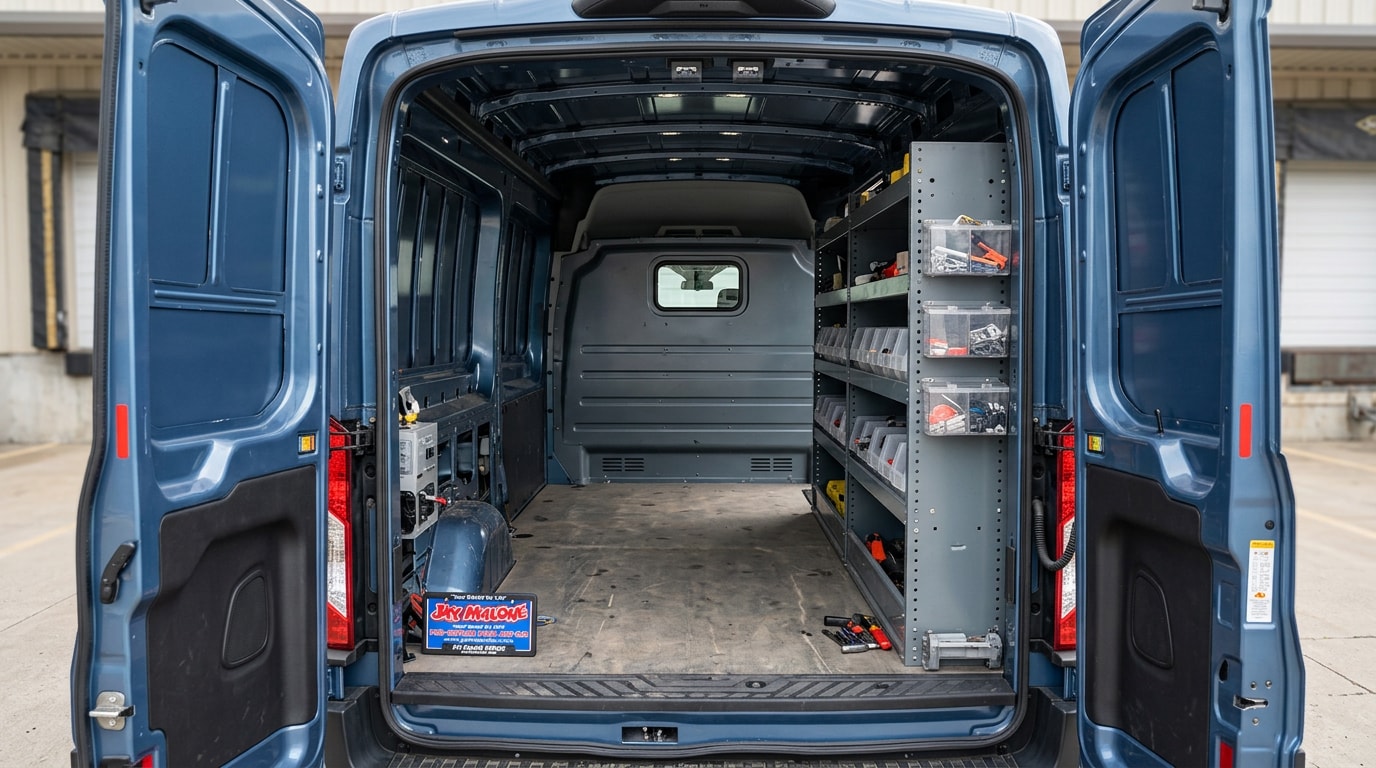
The 2026 Ford Transit® Cargo Van’s defining advantage is configurability. Three roof heights (Low, Medium, High), two wheelbases (130-inch and 148-inch), three overall lengths (Regular Length, Long Length, Extended Long Length), and five model series (Transit-150, Transit-250, Transit-350, Transit-350 HD SRW, Transit-350 HD DRW) combine to give buyers over a hundred Cargo Van permutations. Each combination delivers very different cargo dimensions, payload ratings, and use-case fit. The right configuration for an electrician working standing inside a high-roof van is wildly different from the right configuration for a courier service running short-distance deliveries in a low-roof regular-length van. This guide walks through every Cargo Van dimensional and capability decision — roof heights and what each one means for daily use, wheelbase and length combinations, payload capacity by configuration, max towing, and how to spec the right Cargo Van for your work in central Minnesota.
On This Page
Roof height is the single biggest decision when ordering a Cargo Van. It affects interior workspace, what fits standing-up loads, fuel economy, parking access, and which Trade Packages and upfit options are available.
Low Roof. Standard van height. Fits in standard residential garages and most commercial parking structures. Best for cargo that doesn’t require standing inside the van.
Medium Roof. Standing-height interior for shorter operators. Good middle-ground for trade operations where occasional standing access matters but full standing height isn’t needed daily.
High Roof. Full standing room for most adults. The right answer for any trade or service operation where technicians work inside the van regularly.
Practical roof height decision:
Wheelbase and overall length combine to determine the Cargo Van’s cargo space. Two wheelbase options and three length variants:
130-inch wheelbase (Regular wheelbase).
148-inch wheelbase (Long wheelbase — LWB).
Three overall lengths:
2026 Trade Package update for LWB-EL. The Electrician (66K), HVAC (66L), and General Contractor (66M) Trade Packages are now available in Extended Long Length configurations. Previously these packages were limited to shorter configurations — now tradespeople can spec maximum cargo capacity AND factory shelving and upfit in one order.
Within each Cargo Van configuration, the model series designates the Gross Vehicle Weight Rating (GVWR) class — same chassis architecture, different weight ratings depending on suspension, drivetrain, and components.
Transit-150 Cargo Van.
Transit-250 Cargo Van.
Transit-350 Cargo Van.
Transit-350 HD SRW Cargo Van.
Transit-350 HD DRW Cargo Van.
Maximum payload by configuration (Ford-published figures for common configurations):
Payload decreases slightly as you go to taller and longer configurations because the body weight increases. The numbers above are maximum payload by configuration — actual payload for any specific Cargo Van varies based on exact configuration, options, drivetrain, and upfit equipment. For specific payload figures on the configuration you’re considering, give us a call and we’ll pull the exact numbers from Ford’s spec documents.
Plan upfit weight into your payload calculation. Factory Trade Packages add weight to the empty van. Aftermarket shelving, dividers, racks, climate equipment, and Pro Power Onboard add additional weight. A loaded Trade Package Cargo Van might have 600-1,000 lbs of upfit weight before you add cargo and passengers. Subtract upfit weight from maximum payload to determine real-world cargo capacity.
Cargo volume varies dramatically across Cargo Van configurations:
Practical cargo dimension considerations:
For specific cargo dimensions on the exact configuration you’re considering, give us a call. We can pull the exact length, width, height, and door dimensions from Ford’s spec documents. The variation between configurations is significant — what fits in a high-roof LWB-EL won’t necessarily fit in a low-roof regular-length van.
Cargo Van access points include:
Sliding side cargo door.
Rear cargo doors.
Cab access doors.
2026 update for Passenger Van high-roof variants: 253-Degree Rear Door Hinge Opening now optional on high-roof Passenger Van LWB and LWB-EL configurations. The wider rear door opening makes it easier to load wheelchairs, large items, or accommodate wheelchair-accessible upfit applications. (Note: this is a Passenger Van update, not directly affecting Cargo Van rear door options.)
Side cargo windows. Windows-All-Around (option 17F) adds windows to the cargo area sides — useful for buyers needing visibility into the cargo area or for crew van conversions. Not available with all Cargo Van configurations.
Laminated Safety Glass (92A) — new for 2026 on Mid/High Roof Gas Cargo configurations. Previously optional on E-Transit Cargo only. Laminated glass provides additional security and reduces cargo theft risk vs. standard glass.
The Transit isn’t built primarily for towing — it’s a cargo van first, towing capability second. But the Transit can pull smaller trailers within rated capacity:
Maximum towing: up to 4,500 lbs with the Heavy-Duty Trailer Tow Package and the right configuration. The maximum tow rating requires the 3.5L EcoBoost V6 engine, the Heavy-Duty Trailer Tow Package, and specific drivetrain/configuration combinations.
Standard tow capability: lighter ratings without the Heavy-Duty Trailer Tow Package — typically 2,000-3,500 lbs depending on configuration and engine. Lower tow ratings on PFDi than EcoBoost.
Common Transit Cargo Van towing scenarios:
The Heavy-Duty Trailer Tow Package includes:
For buyers with significant tow requirements (over 4,500 lbs), the Transit isn’t the answer. The F-150, Super Duty F-250/F-350/F-450 are the right Ford vehicles for serious towing. The Transit Cargo Van is built primarily for cargo — tow capability is a secondary capability for occasional smaller-trailer use.
Trailer tongue weight subtracts from available payload. The math matters for buyers running both cargo loads and trailers:
Tongue weight typically 10-15% of trailer weight for conventional bumper-pull trailers (the only towing type the Transit handles). A 4,500-lb trailer at 12% tongue weight = ~540 lbs of weight on the truck’s rear bumper.
Worked example. You’re towing a 3,000-lb cargo trailer (360 lbs tongue weight at 12%). You have 800 lbs of tools and cargo in the van. Your driver and one passenger weigh 350 lbs combined.
For most Transit Cargo Van applications, payload capacity is comfortably more than needed even when towing. The Transit’s payload ratings are generous enough that buyers rarely need to worry about the math — unless you’re running maximum cargo loads AND maximum trailer weight simultaneously.
Specific Cargo Van configurations we sell to central MN buyers:
Electrical contractor with full upfit. Transit-250 Cargo Van, High Roof, 148-inch wheelbase, Extended Long Length (LWB-EL), 3.5L EcoBoost V6, AWD optional, Electrician Trade Package (66K, now available in LWB-EL for 2026), Pro Power Onboard 2.4 kW (90E), Cab Steel Bulkhead, Auxiliary A/C and Heater (57G), Engine Block Heater. The maximum-capability electrician’s van — full standing room, maximum cargo length, factory trade upfit, jobsite power.
HVAC contractor. Same configuration but HVAC Trade Package (66L) instead of Electrician. HVAC package configures shelving and storage for HVAC service tools, copper, ductwork, and parts.
General contractor running tools and materials. Transit-250 Cargo Van, High Roof, 148-inch wheelbase, LWB or LWB-EL, General Contractor Trade Package (66M), 3.5L EcoBoost V6, AWD optional, Pro Power Onboard 2.4 kW. For contractors carrying larger inventory of tools, materials, and parts.
Plumbing contractor. Transit-250 Cargo Van, Medium or High Roof, LWB, 3.5L EcoBoost V6, available Shelving Package (66H) plus aftermarket plumbing-specific shelving, Pro Power Onboard, AWD optional for rural service work.
Mobile mechanic. Transit-250 Cargo Van, Medium or High Roof depending on whether the tech works standing, 148-inch wheelbase, 3.5L EcoBoost V6, aftermarket workspace shelving, Pro Power Onboard 2.4 kW, available Dual Alternator. Genuinely capable mobile shop on wheels.
Local-route last-mile delivery (e-commerce, parts, supply). E-Transit Cargo Van or 3.5L PFDi Cargo Van depending on charging infrastructure access. Low or Medium Roof, 130-inch wheelbase for urban delivery (or 148-inch for higher volume), Regular or Long Length. Cost-focused operation.
Courier and parts delivery (light loads). Transit-150 Cargo Van, Low Roof, 130-inch wheelbase, Regular Length, 3.5L PFDi V6, RWD. Lowest acquisition cost, best fuel economy, smallest footprint for urban delivery routes.
Mobile detailing operation. Transit-250 Cargo Van, Medium Roof for occasional standing access, 148-inch wheelbase, 3.5L EcoBoost V6, Pro Power Onboard, aftermarket water tank, pressure washer setup, and air compressor.
Mobile veterinary or pet services. Transit-250 Cargo Van, High Roof for standing exam access, 148-inch wheelbase, LWB, 3.5L EcoBoost V6, aftermarket veterinary equipment installation, Pro Power Onboard 2.4 kW for medical equipment, Engine Block Heater.
Food and grocery delivery (small fleet). Transit-250 Cargo Van, Low or Medium Roof, 148-inch wheelbase, 3.5L PFDi V6, aftermarket cargo shelving for delivery organization. E-Transit option if depot charging infrastructure is in place.
Camper van conversion enthusiast. Transit-250 or Transit-350 Cargo Van, High Roof, 148-inch wheelbase, Extended Long Length (LWB-EL), 3.5L EcoBoost V6, AWD optional, aftermarket conversion with kitchen, bed, electrical system, water system. The most popular Class B camper conversion platform in central MN.
Larger trade operations needing maximum capability. Transit-350 HD SRW or Transit-350 HD DRW Cargo Van, High Roof, 148-inch wheelbase, LWB-EL, 3.5L EcoBoost V6 (standard), AWD optional. The maximum Cargo Van capability before stepping up to Chassis Cab body upfit applications.
Some specific MN factors for Cargo Van buyers:
AWD for rural service work. McLeod, Meeker, and Renville county service operations reaching customers on rural gravel roads benefit substantially from AWD. Available with 3.5L EcoBoost V6. Not available with E-Transit or with PFDi on most configurations.
Garage clearance for High Roof. High Roof Cargo Vans may exceed standard residential garage door clearances. Check your garage clearance before ordering. Most central MN residential garages have 7-foot to 8-foot door clearances; High Roof Transit Cargo Vans approach or exceed this in some configurations.
Engine Block Heater. 400W rating, strongly recommended for buyers parking outside in winter. Plug in for 2-3 hours before starting — gets engine to operating temperature faster, reduces wear on cold starts, gets cabin heat available sooner.
Trade Packages in LWB-EL (new for 2026). Tradespeople wanting maximum cargo capacity AND factory upfit can now order Electrician (66K), HVAC (66L), or General Contractor (66M) in Extended Long Length. Substantial upgrade for serious trade operations.
Pro Power Onboard for jobsite tools. 400W standard on most Cargo Van configurations — powers hand tools, phone chargers, work lights. 2.4 kW (option 90E) for tradespeople running circular saws, miter saws, smaller compressors, and multiple corded tools simultaneously. Same Pro Power Onboard 2.4 kW provides home backup capability during power outages (with proper transfer switch installation by a licensed electrician).
Cargo Van towing for ag and equipment use. The 4,500-lb max tow capacity handles smaller equipment trailers, side-by-side trailers, and snowmobile trailers common in central MN. For heavier ag use, the Super Duty is the better answer.
Heavy commercial body upfit alternative. If your operation needs more than the Cargo Van’s configurations can deliver, Chassis Cab is the answer — service bodies, dump bodies, flatbeds, refrigerated bodies, larger commercial body builds. We coordinate with regional body builders for upfit applications.
Walk through these decisions in order:
Step 1: How will you use the cargo space?
Step 2: How much cargo length do you need?
Step 3: What payload do you need?
Step 4: Which engine?
Step 5: RWD or AWD?
Step 6: What upfit and packages?
Step 7: Towing requirements?
Key Takeaways
Depends on your garage door clearance. Standard residential garage doors are typically 7 feet (84 inches) tall. High Roof Transit Cargo Vans approach or exceed this height in some configurations — measure your garage door clearance before ordering. Many High Roof Transit owners park outside or in commercial buildings with taller doors. If you need a Cargo Van that fits in a standard residential garage, Low Roof is the right answer. Medium Roof may or may not fit depending on your specific garage clearance — measure carefully.
Both use the 148-inch wheelbase. Long Length is the standard body length on the 148-inch wheelbase. Extended Long Length (LWB-EL) adds additional body length behind the rear axle, increasing total cargo length. The extended rear body increases overall vehicle length, which affects parking and maneuverability. For maximum cargo capacity (electrical contractors with full Trade Package, mobile service operations with extensive equipment, camper van builds, plumbing contractors with sheet goods and pipe), the LWB-EL is the right answer. For most trade and service work, standard Long Length is plenty.
Maximum payload approximately 4,085 lbs on Low Roof configurations, decreasing as you go to taller and longer configurations (3,955 lbs Medium Roof, 3,739 lbs High Roof, 3,536 lbs High Roof Extended Length). Maximum payload on heavier Transit-350 HD configurations is higher. Specific payload for any configuration varies based on exact spec, options, drivetrain, and upfit equipment. For exact payload on the configuration you’re considering, call us and we’ll pull the figure from Ford’s spec documents.
Yes, within rated capacity. Maximum towing 4,500 lbs with the Heavy-Duty Trailer Tow Package and 3.5L EcoBoost V6. Suitable for pop-up campers, smaller travel trailers under 4,500 lbs loaded weight, and smaller fifth-wheel trailers (though the Transit doesn’t have factory fifth-wheel hitch prep — aftermarket fifth-wheel installation in a Cargo Van bed is uncommon). For mid-size or larger travel trailers (over 4,500 lbs), the F-150 or Super Duty is the more appropriate vehicle. For camper van enthusiasts, the Transit Cargo Van itself can be converted into a Class B camper — that’s a more common Transit application than towing a separate camper.
Standard Cargo Van configurations come without side cargo area windows — the cargo body sides are solid panel. Windows-All-Around (option 17F) adds windows to the cargo area sides if you need visibility into the cargo area or want a more crew-van-style appearance. For most trade and delivery applications, no windows is the right answer — better cargo security, no concerns about glass damage from cargo, no thermal issues from sun heating cargo through windows. For crew van conversions, mobile service applications wanting visibility, or buyers converting to camper van builds, Windows-All-Around may be useful.
Cab Steel Bulkhead (factory option) installs a solid steel wall between the driver/passenger area and the cargo area. With bulkhead: cargo is fully isolated from the cab (better security, prevents cargo from entering cab area in a crash or hard stop), the cab climate control only heats/cools the cab (more efficient), and you typically need Auxiliary A/C and Heater (57G) if you want climate control in the cargo area. Without bulkhead: full pass-through between cab and cargo area (you can reach back to grab tools), cab climate control affects the cargo area too, no separate cargo climate equipment needed. For most trade applications, the bulkhead is recommended — better security, better climate efficiency, prevents cargo from shifting into the cab area. For camper van conversions and some mobile service applications wanting cab-to-cargo access, skip the bulkhead.
Empty Cargo Vans (especially Low Roof) can be light on the rear axle — RWD models without load may struggle for traction on snow and ice. Add weight in the cargo area (sandbags, salt bags, or actual cargo) to improve traction. AWD configurations handle winter substantially better than RWD because power goes to all four wheels. Snow tires make a meaningful difference on all configurations — substantially better grip on snow and ice than all-season tires. For year-round MN service operations reaching customers in winter conditions, AWD with snow tires is the most confident setup. RWD with proper winter tires also works for most paved-road operations.
If you’ve worked through the decision framework, the next step is configuring your build. Come down to our Hutchinson showroom on Highway 7 and we’ll walk through the order. Bring your routes, your typical loads, your upfit plans, and your fleet needs — we’ll spec the right Transit Cargo Van for the work. If you have specific cargo dimensions or weight requirements, we’ll pull exact figures from Ford’s spec documents for your configuration.
If we don’t have your exact configuration in stock, we’ll either pull one from another dealer at no extra charge or place a factory order through Ford. Same price either way — that’s how we’ve operated since 2005.
About the Author
I’m Jordan Malone-Forst, Assistant General Manager at Jay Malone Motors in Hutchinson, MN. I’m proud to be part of the family business my dad Jay started in 2005 — and even prouder to serve the community I grew up in. When I’m not at the dealership, you’ll find me involved with the Hutchinson Ambassadors and Chamber of Commerce. If you have questions about any Ford vehicle or want to talk through your options, reach out — I’d love to help.